
News
UPDATED: Unexpected Perseid Meteor Outburst on 14 August 2021
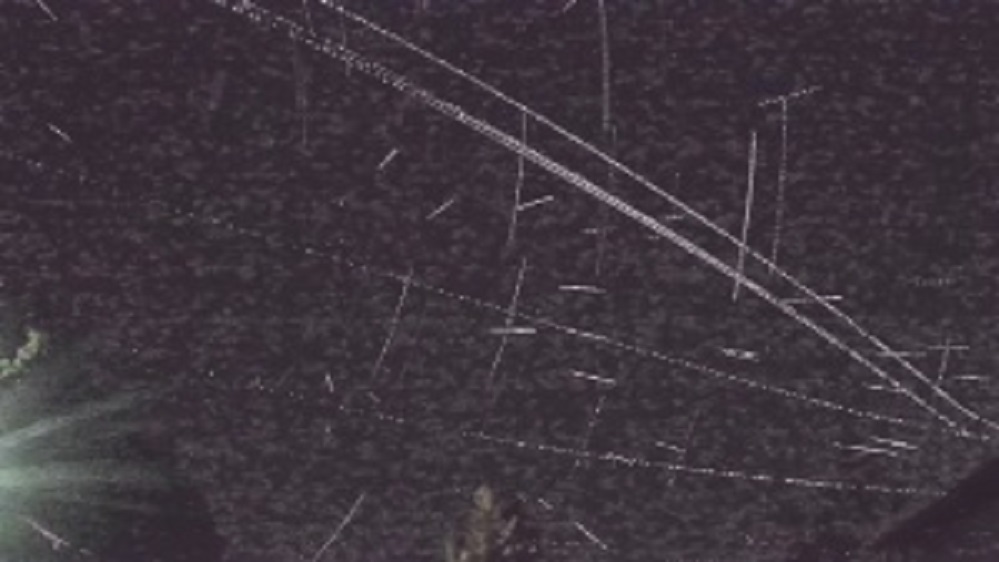
This is a composite image of meteors captured from the San Diego area between 8-9 Universal Time (1:00-2:00am PDT) on 14 August 2014. This camera faces NE towards the radiant so meteors can be seen shooting in all directions. Courtesy University of Arizona
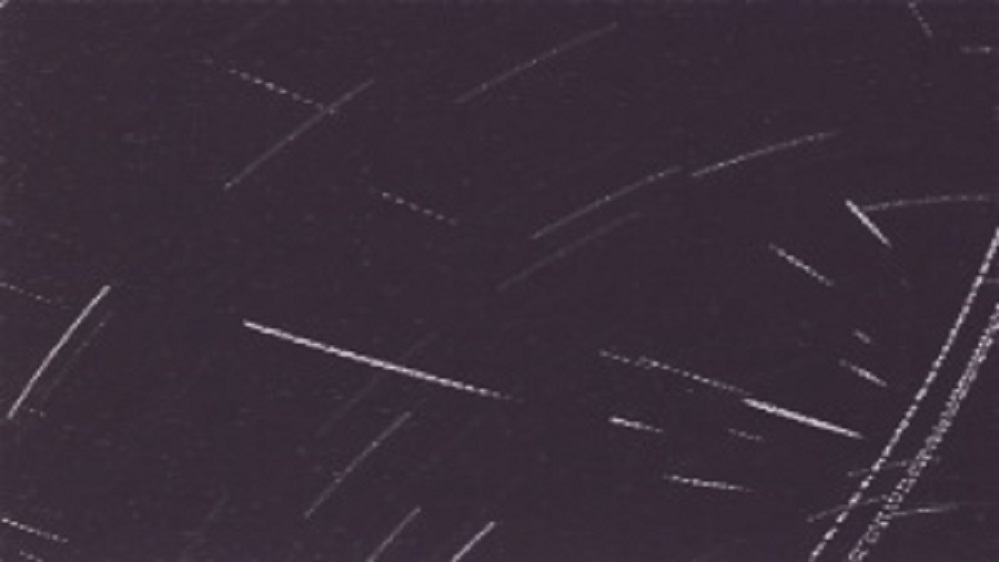 This is a composite image of meteors captured from the San Diego area between 8-9 Universal Time (1:00-2:00am PDT) on 14 August 2014. This camera faces overhead and the radiant lies outside the frame to the right. The long streaks are aircraft. Courtesy University of Arizona
On the morning of 14 August 2021, the Perseid meteor shower displayed an unexpected outburst of meteors between 06:00 and 09:00 Universal Time (1:00-4:00am CDT). So far we have received visual confirmation of an impressive display of Perseids from observers in Wyoming, USA and Ontario, Canada. AllSky camera systems located in Iowa, USA, have recorded between 900-1100 meteors each during the course of the entire night. My AllSky system, located outside of San Diego, CA, USA, recorded just under 600 meteors with cloud interference and a lower radiant altitude. The cause of this outburst is currently unknown but is probably the result of an unknown filament of comet debris produced by comet 109P/Swift–Tuttle as it raced through the inner solar system many centuries ago . Rates are normally 50 percent lower each preceding night after maximum but these rates are two to three times more than was seen during the expected maximum on the night of August 12/13.
[gallery ids="13895,13894,13893"]
CBET 5016 (Jenniskens, 2021) states the peak was reached on Aug. 14, 08h02 UT (solar longitude 141.474 ±0.005 degrees (equinox J2000.0)), with maximum ZHR between 130 ±20 (calculated from CAMS Texas and California networks) and 210 ±20 (calculated by K. Miskotte (DMS) from Pierre Martin's visual observations) in good agreement with values calculated by H. Ogawa of the International Project for Radio Meteor Observation from radio forward scatter meteor observations. According to Peter Jenniskens (MeteorNews (b)), this pobable filament may have been crossed over the last years, especially in 2018 (ZHR ~ 25 at solar longitude 140.95°) and 2019 (ZHR ~ 30 at solar longitude 141.02°) .
References:
MeteorNews (a): https://www.meteornews.net/2021/08/14/strong-outburst-perseids-on-august-14-2021-06-09-ut/
MeteorNews (b): https://www.meteornews.net/2021/08/15/perseid-meteor-outburst-2021/
Jenniskens P., 2021. “Perseid meteor shower outburst 2021”. CBET 5016, 2021 August 14, editor D.W.E. Green.
Heather M. Wendelboe: Personal Communication
Michael Hankey: Personal Communication
Last updated: 15/08/2021, 23h14 UT